- The best overall time to visit Siem Reap is November to February: dry, cool, and ideal for the temples.
- For fewer crowds and lower prices, aim for late September to early November or mid-March.
- April and May are the hottest months (35-40°C). Great for pool days, tough for long temple walks.
- The rainy season (June to October) is green, dramatic, and cheap, with short showers rather than all-day downpours.
Siem Reap has two simple seasons: dry and wet. Both have their charm, and "best time" really depends on what you want from your trip. Cool mornings at Angkor Wat? Lush green jungle around Ta Prohm? Empty temples and half-price rooms? There's a month for each.
In this guide, we break down the year month by month, so you can pick the window that matches your priorities: weather, crowds, prices, and the specific temples or activities you have in mind.
Quick Answer: When Is the Best Time to Visit Siem Reap?
For most travellers, November to February is the sweet spot. Daytime temperatures hover around 28-32°C, mornings are cool enough for temple exploration without sweating through your shirt, and the skies are clear for sunrise photography at Angkor Wat. The trade-off: this is peak tourist season, so expect crowds at the main temples and higher hotel rates.
If you're flexible, the shoulder months (late October, early March) offer almost the same conditions with noticeably fewer people and better prices. And if you don't mind short afternoon showers, the green season (May to October) reveals a completely different Cambodia: moss-covered stones, full moats, and temples that feel almost deserted.
Siem Reap Weather by Month
Here's the month-by-month breakdown of what to expect in terms of temperature, rainfall, and atmosphere. Average highs are based on long-term averages for the Angkor region.
| Month | Avg High | Rainfall | Vibe |
|---|---|---|---|
| January | 32°C | Very low | Peak season, cool mornings, sunny days |
| February | 33°C | Very low | Peak season, warm and dry |
| March | 35°C | Low | Hot but dry, crowds thin mid-month |
| April | 37°C | Low | Hottest month, Khmer New Year mid-April |
| May | 35°C | Moderate | First rains, landscape greens up |
| June | 33°C | High | Rainy season, afternoon showers |
| July | 32°C | High | Lush green, fewer tourists |
| August | 32°C | High | Full rainy season, dramatic skies |
| September | 32°C | Very high | Wettest month, moats full, reflections |
| October | 31°C | High | Rains ease, landscape at its greenest |
| November | 31°C | Low | Dry season starts, shoulder sweet spot |
| December | 31°C | Very low | High season begins, cool and dry |
The Four Main Seasons
Cool Dry Season (November to February)
This is the classic window, and for good reason. Mornings can dip to 20°C in December and January, which sounds mild until you're standing at the edge of a reflection pool at 5:30 AM in a t-shirt. Pack a light layer for sunrise. Daytime highs rarely exceed 32°C, humidity is low, and rain is almost non-existent.
This is the best period for cycling through the temples, long walks, and photography. The downside: crowds. Angkor Wat at sunrise during December and January can bring 800 to 1,000 people to the reflecting pools. Tour groups fill Ta Prohm between 9 and 11 AM. Hotel rates jump 30 to 50% compared to the off-season.
- Go if: you want the best weather and don't mind the crowds
- Book ahead: good hotels fill up 2-3 months in advance for December and January
- Highlights: Water Festival (Bon Om Touk) in early November, Christmas and New Year in town
Hot Dry Season (March to May)
March starts pleasant and ends hot. By April, daytime temperatures cross 37°C and the humidity builds. The temples are still open, the skies are still blue, but climbing Bakan tower at Angkor Wat at midday becomes a physical challenge. Locals wisely slow down in April.
The upside: tourist numbers drop sharply after mid-March, prices soften, and you can have temples almost to yourself between 11 AM and 2 PM (because nobody else is out in that heat). This is also when Cambodia celebrates Khmer New Year (April 13-16), a three-day public holiday with street parties, water fights, and family gatherings. The temples stay open but many local businesses close.
- Go if: you want cheaper rates and don't mind the heat
- Strategy: start at 5:30 AM, rest at the pool from 11 AM to 3 PM, return for sunset
- Watch out: Khmer New Year can mean reduced services at restaurants and shops
Early Rainy Season (June to August)
Don't let "rainy season" scare you off. In Cambodia, rain usually means a 30 to 60 minute afternoon downpour, not an all-day washout. Mornings are typically dry, clear, and noticeably cooler than the hot season. The countryside explodes in green, rice paddies fill with water, and the Tonle Sap lake begins its dramatic annual expansion.
Crowds are at their lowest in July and August. Hotel rates are 30 to 40% below peak. Temples like Ta Prohm look incredible when wet: moss glistens, tree roots darken, and the light through the canopy is softer than at any other time of year.
- Go if: you want atmosphere, fewer tourists, and lower prices
- Strategy: visit temples in the morning, relax in the afternoon when showers arrive
- Highlights: the countryside and rice paddies are at their most photogenic
Peak Rainy Season (September to October)
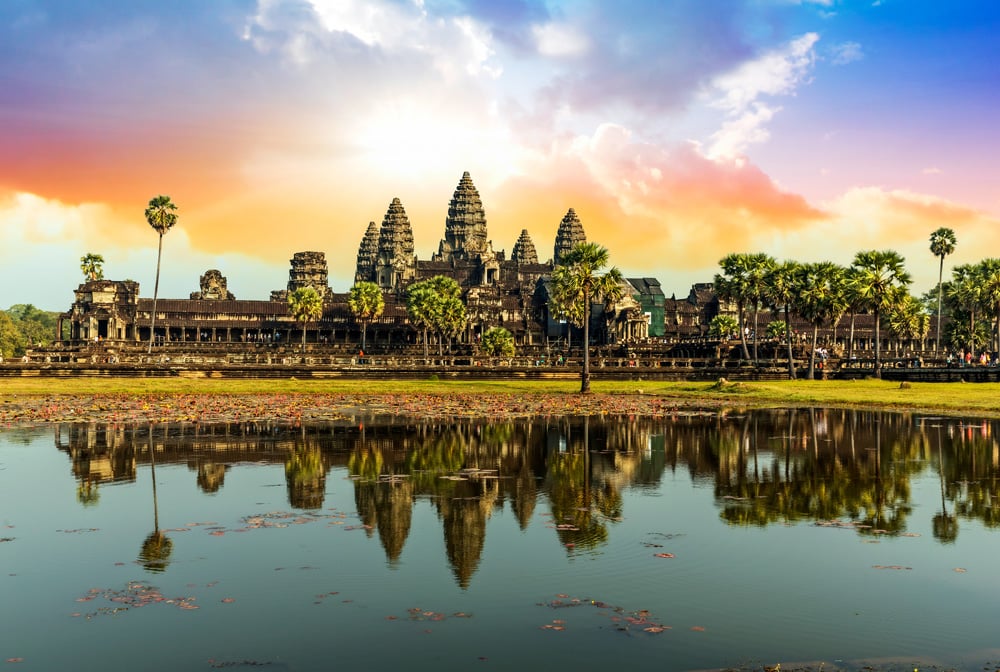
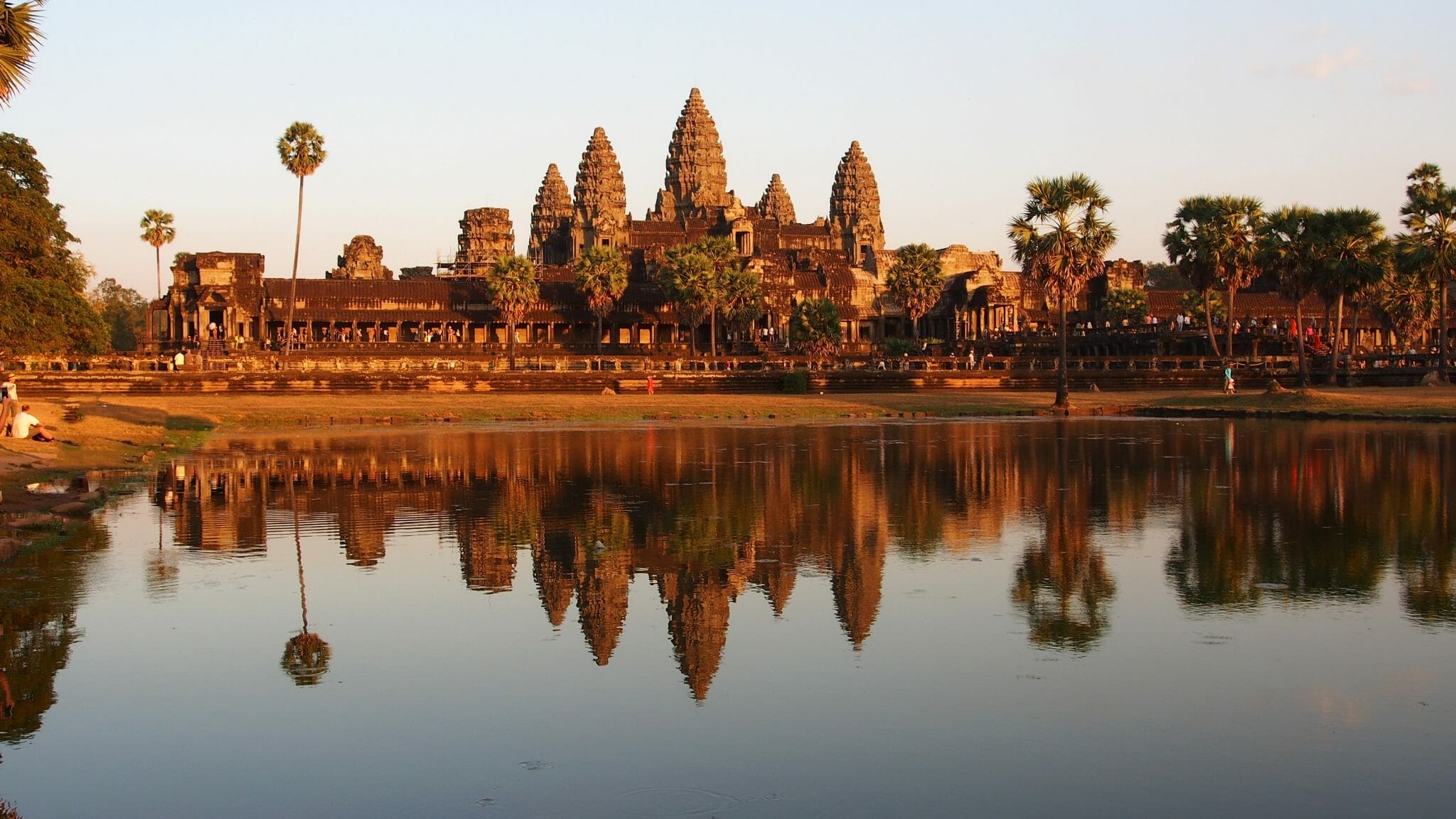
September is the wettest month, but the rains are still usually concentrated in short afternoon bursts. The payoff is significant: the moats around Angkor Wat fill to capacity, which means the reflections in the north and south pools are mirror-perfect on calm mornings. Many photographers specifically choose October for this reason.
By mid-October, the rains ease and everything is at its greenest. The days before the dry season kicks in (late October, early November) are one of the best-kept secrets for visiting Siem Reap: warm days, cool mornings, full landscape, and still-low crowds.
- Go if: you want dramatic skies, full moats, and the best temple reflections
- Bring: a light rain jacket, waterproof bag for camera gear
- Highlights: Tonle Sap lake floating villages are at their most impressive
Best Time for Specific Activities
Temple Visits
November to February for comfortable walking and clear photos. July to October for atmosphere and low crowds. Avoid April midday unless you plan to move very slowly.
Angkor Wat Sunrise
Possible year-round. December to February gives you clear, predictable skies. March and September equinoxes (around the 20th and 22nd) offer the rare alignment where the sun rises directly behind the central tower. For the full breakdown, read our Angkor Wat sunrise guide.
Cycling the Angkor Park
November to February is ideal: cool mornings, minimal rain, dry paths. May to October is still possible but bring a poncho and expect muddy sections on some back routes. Villa Agati offers bicycle rental year-round.
Tonle Sap Lake and Floating Villages
September to December is the best window: the lake is at its seasonal maximum and boats can reach the flooded forest areas. Between March and May, the water level drops significantly and some villages become harder to access.
Phare Circus and Cultural Shows
Year-round. Phare Circus performances are especially welcome during the rainy season, as they're indoors and a perfect plan for wet evenings.
When to Avoid (or Embrace) Crowds
If you want to understand when the temples are busy, it helps to know when visitors arrive. Angkor archaeological park welcomed 955,131 international visitors in 2025, and they concentrate into specific months.
- Busiest months: December, January, February (Western winter)
- Second peak: July and August (European summer, but fewer overall)
- Quietest months: May, June, September
- Chinese New Year: late January or early February brings a surge of regional visitors for about 10 days
- Khmer New Year: April 13-16, mostly domestic tourism and local celebrations
Planning Around Hotel Prices
Hotel rates in Siem Reap follow a predictable pattern. Peak rates apply from late December through February, with an extra bump during Chinese New Year and Christmas week. The cheapest months are consistently May, June, and September, when rates can drop 30 to 50% below peak.
At Villa Agati, we maintain the same standards year-round, which makes the off-season an especially good value: the same rooms, breakfast, pool, and service for significantly less. See our rooms and current rates.
Packing by Season
Whatever month you pick, a few things don't change: you'll need modest clothing for the temples (shoulders and knees covered), comfortable walking shoes, sunscreen, and a water bottle. Beyond that, adjust for the season:
- Cool dry (Nov-Feb): add a light sweater or long-sleeve top for sunrise; shorts and t-shirts for the day
- Hot dry (Mar-May): lightweight breathable fabrics, sun hat, extra hydration, electrolyte packets
- Rainy (Jun-Oct): light rain jacket or poncho, waterproof bag, quick-dry clothing, mosquito repellent
- Year-round: a scarf or sarong works for both temple modesty and unexpected aircon chills
Frequently Asked Questions
Is it worth visiting Siem Reap during the rainy season?
Yes. Showers are usually short (30-60 minutes) and concentrated in the afternoon. Mornings stay dry and the landscape is at its most beautiful. Prices are lower and crowds are smaller. As long as you're flexible about afternoon plans, green season is a great option.
Which month has the best weather in Siem Reap?
December and January. Cool mornings (20-24°C), warm but not hot afternoons (30-32°C), dry skies, and minimal humidity. The trade-off is that these are also the most crowded and most expensive months.
What is the hottest month in Siem Reap?
April, with daytime highs regularly reaching 37-40°C. Even in the shade, long walks become tough. Plan temple visits for sunrise and late afternoon, and embrace the midday pool break.
When does Angkor Wat get the most crowded?
December 20 to January 5 is the absolute peak, followed by Chinese New Year (late January or early February). Weekends during high season are also busier than weekdays.
Can I still visit Angkor Wat when it rains?
Yes. The temples stay open and a light poncho is enough for most showers. Rainy morning photos of Ta Prohm are often more atmospheric than dry season shots. Just skip any exposed climbs (like Bakan tower) during active downpours for safety.
How far in advance should I book a hotel in Siem Reap?
For December to February: 2-3 months ahead, especially for well-reviewed properties. For the rest of the year, 2-4 weeks is usually enough. Last-minute bookings in May, June, or September often get great deals.