- Khmer food is built on four flavours: salty, sweet, spicy, sour. The signature paste is kroeung; the signature seasoning is prahok (fermented fish).
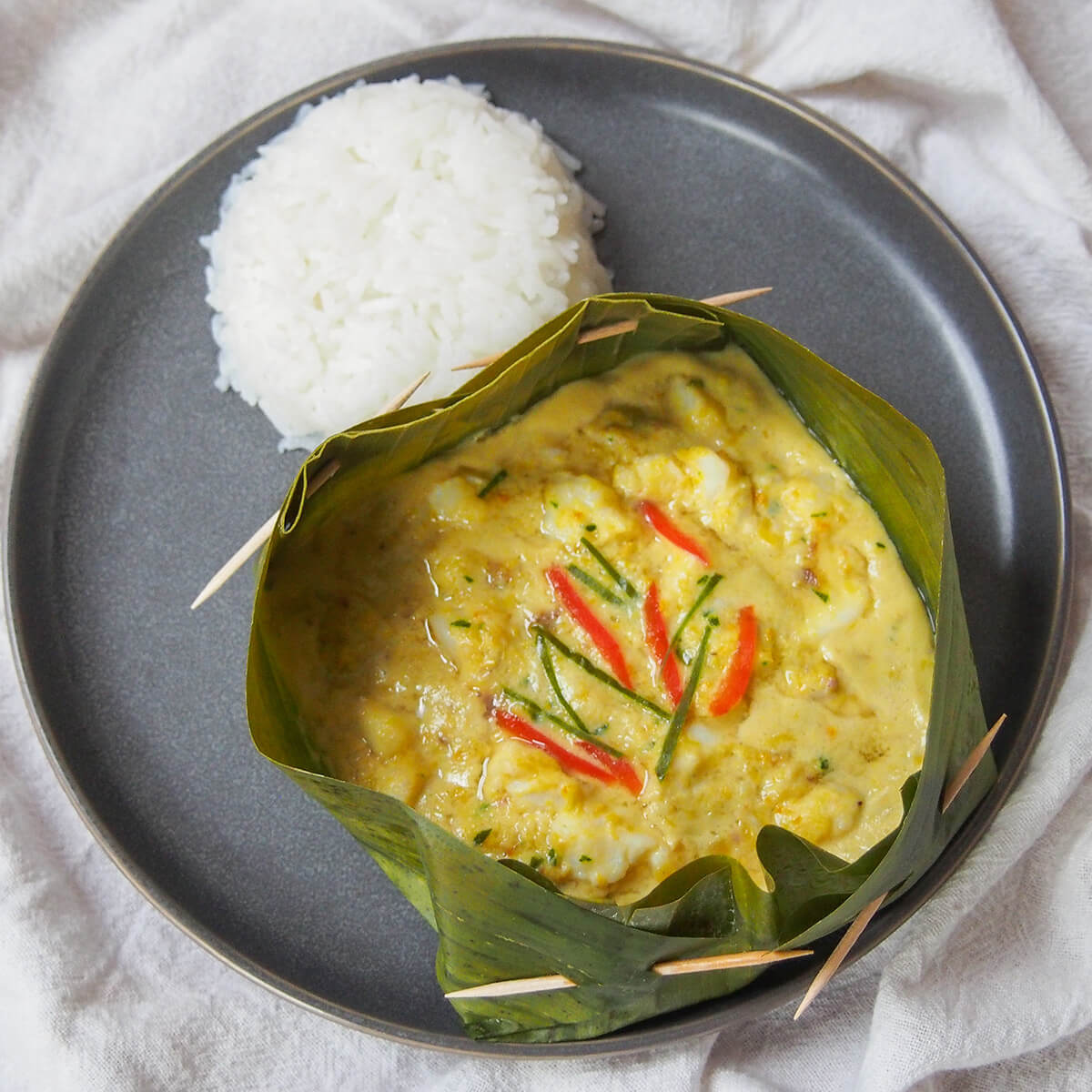
- Cambodia's national dish is amok trey: white fish steamed in banana leaves with coconut milk, lemongrass, and kroeung.
- It is not "mild Thai." Khmer cooking uses more turmeric, more roots and rhizomes, less raw chilli, and a precise sour-sweet rhythm of its own.
- Start with five dishes: amok, lok lak, num banh chok, bai sach chrouk, samlor korko. They cover breakfast, lunch, dinner, and curry in one sweep.
The Khmer phrase for "to eat" translates literally to "eat rice." That single detail tells you most of what you need to know about Khmer food, before you have tried a single dish. Rice and freshwater fish are the two pillars of Cambodian cuisine, and around them, a 2,000-year-old culinary tradition has built four flavours, a fermented backbone, and a handful of dishes worth crossing a border for.
The common mistake: treating Khmer food as a milder cousin of Thai. It is not. Kroeung uses different aromatics, prahok plays the role fish sauce plays elsewhere, and turmeric is far more prevalent. CNN built a list of 30 dishes worth knowing , we will keep it tighter. This guide names the 12 dishes you actually want to order first, explains what makes them taste the way they do, and tells you where in Siem Reap to find them.
What Makes Khmer Food, Khmer?
Cambodian cuisine has its own logic. Four ideas anchor everything else.
- The four flavours: salty, sweet, spicy, sour, arranged across the table rather than balanced inside each dish. Khmer cooks expect you to mix and match.
- Rice as the staple: plain steamed rice anchors every meal. The Khmer verb "to eat" is literally "to eat rice."
- Kroeung as the paste: a fragrant base of lemongrass, galangal, garlic, shallots, kaffir lime, and turmeric. It comes in red, green, and yellow versions. Read the canonical breakdown of kroeung paste.
- Prahok as the seasoning: fermented freshwater fish paste, used in trace amounts as the umami backbone. The smell is loud; the result in cooked dishes is not.
Most ingredients are seasonal. Tonle Sap's freshwater fish, lotus stems, palm sugar, Kampot pepper , all swing with the rains. If you want to taste them at peak, the dry months from November to February are reliable; for a wider seasonal picture, see our guide to the best months to visit.
12 Khmer Dishes Every Traveller Should Try
A long list looks impressive on a screen, but at the table you order one dish at a time. These twelve cover the full range , breakfast to dessert, curry to salad, river fish to grilled meat , and they are the ones our team sends first-time guests after.
- Amok trey , fish steamed in banana leaves with coconut milk and yellow kroeung. The national dish.
- Lok lak , stir-fried beef cubes with black pepper and a lime-and-salt dipping sauce. The default lunch order.
- Num banh chok , cold rice noodles in a green fish curry with cucumber, banana flower, and herbs. The Khmer breakfast.
- Bai sach chrouk , thinly sliced grilled pork over broken rice with a pickled-vegetable side. Every Cambodian's first food memory.
- Samlor korko , herbal vegetable soup with toasted ground rice and a little fish or pork. The dish your Cambodian grandmother makes.
- Samlor machu kreung , sour soup with kroeung paste, fish or beef, water mimosa, and pineapple. Bright and clean.
- Kuy teav , rice-noodle soup with pork-bone broth. The morning street-food default in any town.
- Cha houy teuk , jelly-and-coconut dessert in a glass. Sweet, cold, and refreshing after a temple-day lunch.
- Nhoam svay , green mango salad with dried shrimp, peanuts, fish sauce, and chilli. Sharp and addictive.
- Beef lok lak with lime-pepper sauce , the export version, often the first dish travellers love. Goes with rice and a fried egg.
- Kampot pepper crab , coastal regional speciality. Whole crab stir-fried with green Kampot peppercorns. Hands-on and worth the mess.
- Bamboo sticky rice (kralan) , sticky rice with coconut milk and black bean, roasted inside a section of bamboo. Sold in stacks by the roadside.
The order to try them is roughly: amok and lok lak day one, num banh chok and bai sach chrouk for breakfast, samlor korko and machu kreung when you want something more home-cooked, then the salads and desserts when you are settled in. For the where-to-eat companion, see the food and markets section of our things to do in Siem Reap guide.
Khmer Food vs Thai Food, the Honest Comparison
If you have eaten Thai food, your palate has an inaccurate map of Khmer. Both cuisines use lemongrass, lime, fish sauce, rice. Both grew up in tropical Southeast Asia. The differences are subtle but real, and they explain why a Khmer meal lands differently on the tongue.
The summary: Khmer cooks lay flavours across the table; Thai cooks balance them inside each bowl. Khmer leans more on turmeric and rhizomes; Thai leans more on heat. Prahok plays the role fish sauce plays in Thai.
| Element | Khmer Food | Thai Food |
|---|---|---|
| Heat / chilli | Mild in cooked dishes, chilli served on the side | Heat built into the dish |
| Fermented seasoning | Prahok (fermented fish paste) | Fish sauce (nam pla) |
| Coconut milk | Used selectively (amok, some curries) | Heavy use across many curries |
| Roots and rhizomes | Turmeric, galangal, ginger, fingerroot , central | Used, but less dominant |
| Sour balance | Tamarind, lime, green mango | Lime, tamarind, plus more chilli heat |
| Flavour structure | Multiple dishes, multiple flavours, mixed at the table | One dish balances salty/sweet/sour/spicy |
| Historical influences | Khmer Empire, India, China (Teochew), Vietnam, France | Thai, Mon, Chinese, Lao, Burmese |
The bottom line: if a server tells you a Khmer dish "is a bit like Thai," they are being polite to a tourist. Treat each cuisine on its own terms, and you will taste more of both.
How a Khmer Day Tastes: Breakfast, Lunch, Dinner
Khmer food has a daily rhythm. Knowing what gets eaten when helps you blend in at small canteens where the menu is short and unwritten.
Breakfast in Cambodia is savoury and rice-based. Most Cambodians eat one of two dishes before 8 AM: bai sach chrouk (grilled pork over broken rice with pickled vegetables) or num banh chok (cold rice noodles with green fish gravy and a heap of raw herbs). Kuy teav, the rice-noodle soup, is the third option, more common in Phnom Penh than Siem Reap.
Lunch is light and protein-focused. A typical plate is steamed rice with a stir-fry (lok lak being the textbook example), or a sour soup like samlor machu kreung. Khmer lunch is meant to be eaten quickly and not weigh you down for the afternoon.
Dinner is the family meal, served Khmer-style: a few dishes in the middle of the table, shared, with rice as the constant. A typical dinner combines one curry (amok), one stir-fry, one soup, one salad, and rice. Herbs and raw vegetables arrive on a separate plate; you tear and add them to taste.
Where to Eat Khmer Food in Siem Reap
Siem Reap is where the most Khmer food gets cooked for the most travellers, which means the range is wide and the quality bands are wider. Here is what we tell guests when they ask.
- Old Market food stalls (morning): the most reliable place for breakfast num banh chok and bai sach chrouk. Sit at a plastic stool. Pay $2-3 a bowl. Watch how locals build their plate and copy.
- Wat Bo Road and Kandal Village: the foodie corridor. Garden restaurants, contemporary takes on Khmer classics, full menus in English. Best for amok, lok lak, and a serious dinner with a cocktail.
- Sok San Road: straightforward, locally-favoured small restaurants. The kind of place where the chef and one server run everything between them. Best for samlor korko or kuy teav.
- Pub Street: energy, not the food. If you are here for one night, fine. If you are choosing where to eat dinner four nights in a row, this is not it.
- Your hotel restaurant, when chosen well: at Villa Agati we serve breakfast every morning with homemade bread baked on-site, fresh fruit, and Khmer or Western mains made with ingredients from the Siem Reap market. Our chef cooks both menus side by side, so guests can order amok at lunch and a burger at dinner without changing tables.
How to Get Closer to Real Khmer Cooking
A meal is one entry point. A morning at a Khmer cooking class is another, and it is the experience most of our guests come away talking about. You spend two hours at a small market in Siem Reap, learning what kroeung looks like before it goes into a mortar, then move to a kitchen to pound, chop, stir, taste, adjust, and eat. By the time you are home and someone asks "what's Cambodian food like?" you have a real answer.
Two ways to deepen the food side of a trip:
- Take a half-day cooking class ($25-35 per person, includes the market walk, three dishes, lunch). We arrange these for guests through trusted local instructors. See our Khmer cooking class information for what to expect.
- Eat at a place that cooks both Khmer and Western. Useful on long trips when one family member wants amok and another wants pasta. A small, well-run hotel restaurant solves that problem better than splitting up.
If you'd like a quiet base in Siem Reap with breakfast included, an on-site chef who cooks Khmer and Western, and a team who can book you a cooking class without forwarding three emails, we have rooms ready. Bikes are $2 a day, breakfast is included, and the pool is genuinely the right place to land between meals.
Frequently Asked Questions
Is Khmer food spicy?
Not by default. Most Khmer dishes are mild to medium, with the chilli served on the side so each diner can adjust. The intense heat people associate with Thai food is rare in Cambodian cooking. Two exceptions worth knowing: some grilled-meat dipping sauces, and the green mango salads, can go properly spicy if you ask for them that way.
Is Khmer food vegetarian-friendly?
It can be, but vegetarian travellers should expect to ask. Most traditional Khmer dishes use fish, prahok, or oyster sauce somewhere in the build, even when the headline ingredient is vegetables. Larger restaurants and hotel kitchens prepare vegetarian versions of amok (tofu or vegetables), lok lak (mushrooms), and noodle soups (with vegetable broth). Markets and small canteens are harder; the easiest fallback is plain rice with stir-fried morning glory and a fried egg.
Is street food safe in Cambodia?
Generally yes, with the same precautions you would take in any Southeast Asian country. Eat at busy stalls where the food is cooked to order, look for steady local clientele, and skip anything sitting out warm. Pre-cooked dishes in the sun and raw seafood at informal vendors are the two specific risks. Bottled or filtered water, ice from a sealed source, and washed fruit are usually fine.
Is Cambodian food healthy?
The traditional Khmer diet is balanced and broadly healthy: rice, freshwater fish, a heavy emphasis on fresh herbs, vegetables, and fruit, modest use of cooking oil. Coconut milk shows up in curries but is used less heavily than in Thai cooking. Restaurant versions can be saltier and richer than home cooking, especially the tourist-facing menus. If you eat where locals eat, you naturally get a lighter, more vegetable-heavy version of every dish.