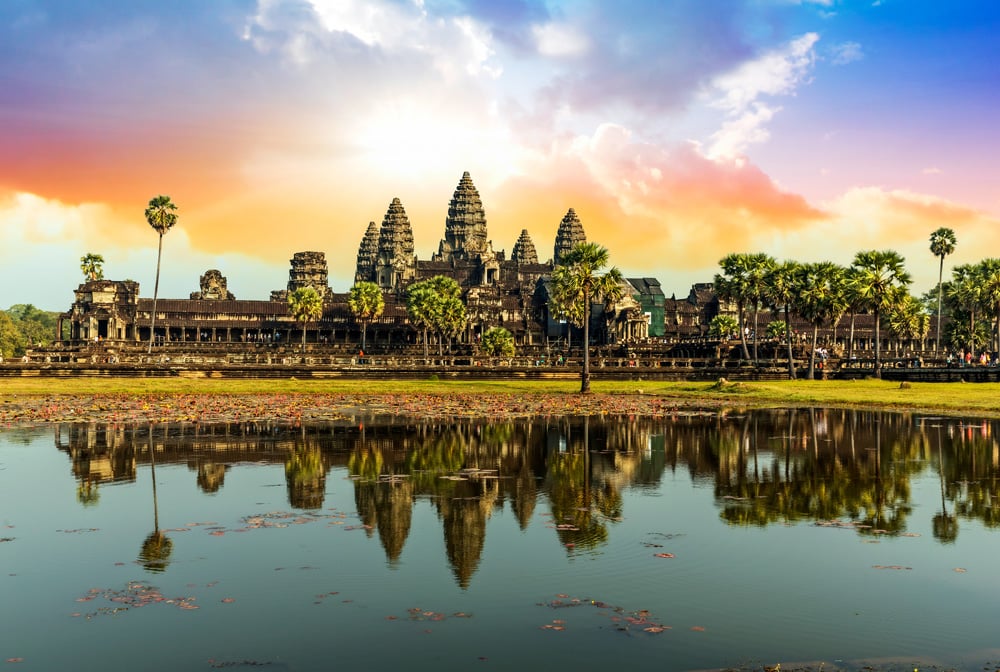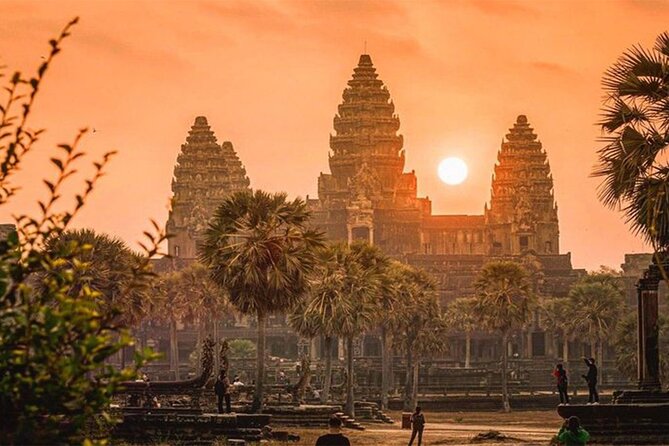
- The 11th Angkor Empire Marathon runs Sunday 2 August 2026, starting in front of Angkor Wat at 4:30 AM with four distances: 42 km, 21 km, 10 km, and 3 km.
- Online registration closes 25 June 2026; super-early-bird fees for international runners are $60 (full), $50 (half), $35 (10 km), and $15 (3 km).
- Expect 26-31°C with high humidity and a 72% chance of rain on race day. Plan a heat-acclimatisation block of at least 10 to 14 days.
- Cut-offs are generous: 6 h 30 for the full, 4 h for the half, 2 h for the 10 km, 45 min for the fun run.
- The course is flat, mostly paved, and passes around 17 ancient temples including Ta Keo, the Victory and North gates of Angkor Thom, and Angkor Wat itself.
The Angkor Empire Marathon is the only full 42 km race run inside the Angkor Archaeological Park, and 2026 marks its 11th edition with over 4,500 runners expected. On Sunday 2 August, runners line up under headlamps in front of the central sanctuary of Angkor Wat for a 4:30 AM start. The route winds past stone temples that have stood for nearly a thousand years, through rice fields and forest, with sunrise breaking somewhere around kilometre 8.
It’s a small race by world standards, and that’s exactly the appeal. Local children high-five you at the kilometre markers; monks watch from temple steps. August in Cambodia is also wet, hot, and humid, which means pacing decisions made in week one of training matter more than peak-week mileage. This guide covers the 2026 race week from a runner’s perspective: how to enter, what to expect on the course, how to prepare for tropical heat, and how to make the trip work as a holiday rather than just a finish line.
1. The 2026 Angkor Empire Marathon at a Glance
The headline numbers, in one place. The Angkor Empire Marathon 2026 takes place on Sunday 2 August, with start and finish both set in front of Angkor Wat’s central sanctuary. Four distances run on the same morning, each with its own start time and cut-off.
| Distance | Start time | Cut-off | Super-early-bird fee (international) |
|---|---|---|---|
| Full marathon (42.195 km) | 4:30 AM | 6 h 30 | $60 |
| Half marathon (21 km) | 5:30 AM | 4 h | $50 |
| 10 km road race | 5:45 AM | 2 h | $35 |
| 3 km fun run | 6:00 AM | 45 min | $15 |
Prices rise in tiers as the race approaches. Race pack pickup happens on 31 July and 1 August at the Royal Angkor Resort, both days from 9 AM until early evening, and you cannot run without your bib and chip.
2. The Angkor Empire Marathon Course Explained
Few marathons share a course with a UNESCO World Heritage Site. This one does, and the route reflects it. Both the full and the half loop through the Angkor Archaeological Park, mostly on flat asphalt and smooth red-dirt roads shaded by old trees.
Highlights you’ll see along the course:
- Angkor Wat: start, finish, and a second pass on the full marathon loop.
- Bayon: 216 carved stone faces, usually visible around kilometre 5 to 6.
- Ta Keo: the steep, unfinished mountain-temple.
- Victory Gate and North Gate of Angkor Thom.
- Long forest sections and rice paddies between temple clusters.
Water stations sit every 2 km, stocked with water and electrolyte drinks; several also hand out bananas. For a deeper sense of what you’re running past, our guide on 5 tips for your first visit to Angkor Wat covers the temples and what makes them worth slowing down for on the days after the race.
3. Which Distance Is Right for You?
Pick the distance that matches your training, not your ambition. The heat punishes ambition.
- 3 km fun run: open to all ages, no race timing, festival atmosphere. A good fit if you’re travelling with kids or a non-running partner.
- 10 km road race: the most popular distance for first-time visitors. Two hours of running gives you the temple atmosphere without the heat exposure of the longer distances.
- Half marathon (21 km): a serious distance in August humidity. Recommended if you’ve already raced a half in heat or trained for at least 8 weeks above 25°C.
- Full marathon (42 km): recommended only for experienced runners with prior tropical race experience. The 6 h 30 cut-off is generous, but humidity above 80% pushes finish times 20 to 30% slower than your cool-weather PR.
The honest take: if you’ve never run in tropical heat, dropping one distance below your usual is the smarter call here.
4. How to Prepare for August Heat and Humidity
Cambodia in August averages 26 to 31°C with humidity above 80% and a 72% chance of rain on race day. Sweat evaporates poorly when the air is already saturated, which means your body’s main cooling system runs at reduced capacity from the start. Heat training is not optional.
Use this 8-week build:
- Weeks 1 to 2. Start adding heat exposure twice a week. Wear an extra layer on easy runs, or finish each session with 20 minutes in a sauna or hot bath.
- Weeks 3 to 6. Keep two heat sessions a week, but don’t stack them on top of mileage increases. The heat is the training stimulus on those days.
- Week 7. Drop intensity, keep heat exposure. Practise your race-day hydration protocol on every long run.
- Week 8 (race week). Short, easy runs in the heat to stay adapted. Avoid the temptation to spend the whole week in air conditioning.
- Race day hydration. Drink to thirst as a baseline, plus around 650 ml per hour as an upper guide. Pre-load with sodium 24 hours before. Take small, frequent sips at every water station.
A landmark review on heat acclimatisation in ultra-endurance running confirms that 10 to 14 days of consistent exposure is the minimum to see measurable cardiovascular adaptation. Plan accordingly.
5. Race Week Logistics in Siem Reap
Most international runners fly into Siem Reap-Angkor International Airport, or via Phnom Penh and onward by bus. Plan to land Thursday or Friday at the latest so you have time for race pack pickup and one easy shake-out run.
Race week timeline:
- Thursday or earlier: arrive and settle. Sleep is the first priority. Time zones do not forgive heat.
- Friday: race pack pickup at Royal Angkor Resort, 9 AM to 6 PM. Bring photo ID, your registration confirmation, and your own pen. The shortest queues are right at opening.
- Saturday: easy 20-minute jog in the morning, then off your feet for the day. Dinner before 7 PM, bed by 9.
- Race morning: 3 AM alarm. Breakfast 90 minutes before the start. The tuk-tuk ride from town to the Angkor Wat start line takes around 20 minutes.
- Sunday afternoon and Monday: rest and recover. Do not book a long temple tour for Sunday afternoon. Your knees will tell you why.
For more on Siem Reap’s climate by season, our piece on the best time to visit Siem Reap explains what makes August different from the December high-season window.
6. Where to Stay for the Angkor Empire Marathon
Siem Reap is small enough that everywhere is “close” in a global sense, but the area you pick shapes how race weekend feels. Three broad zones to choose from:
| Area | Distance to start | Vibe | Best for |
|---|---|---|---|
| Old Market / Pub Street | ~7 km | Busy, loud at night | Spectators, post-race celebration |
| Riverside / Wat Bo / Salakamreuk | 6 to 7 km | Quiet, residential, walkable into town | Most runners |
| North of town (toward Angkor) | 3 to 5 km | Resort-style, often pricier | Runners who want the shortest ride to the start |
For the marathon specifically, the second zone wins on most counts. You’re close enough to make a 3 AM tuk-tuk reasonable, but far enough from Pub Street that Saturday night sleep stays intact. Several Villa Agati guests come back for a second or third stay and mention the same thing: the pool feels different when you’ve actually earned a rest day.
If you’re looking for a quiet base 7 km from the start, with breakfast waiting when you get back from the race, our 11-room boutique sits in the riverside neighbourhood with Villa Agati rooms starting at $30 per night, breakfast and free bikes included.
7. After the Finish Line: Recovery and Temples
The medal ceremony at Angkor Wat finishes by mid-morning. You’ll be back at your hotel by 11 AM, sticky, salt-stained, and probably hungrier than you expected.
A short recovery protocol that works in Siem Reap’s heat:
- Cool down fast. A cold shower or 10 minutes in the pool brings core temperature down faster than any drink can.
- Refuel within 60 minutes. Salty broth, fruit, rice, eggs. A Khmer breakfast hits the same boxes as any sports nutritionist’s checklist.
- Sleep. A 90-minute nap before lunch is more valuable than a same-day massage.
- Move gently in the afternoon. A 30-minute walk along the river or 20 minutes in the pool keeps the legs from seizing up.
- Book the spa & massage for Monday, not Sunday. Same-day deep-tissue work can intensify soreness; give the inflammation 24 hours to settle first.
For Monday onward, your legs will have earned the temples. Many runners use the Angkor Pass bought for race week to revisit the site at a slower pace, and the free bicycles for guests make the smaller circuits manageable without committing to a tuk-tuk schedule.
If you’re planning the trip, book directly so we can arrange a 3:30 AM tuk-tuk to the start line at no extra charge. Mention “marathon” when you book and we’ll have your race-morning logistics ready before you arrive.
Frequently Asked Questions
How many people run the Angkor Empire Marathon?
The 11th edition expects more than 4,500 runners. The previous edition attracted over 4,000 runners from 51 countries. The race has grown steadily since its inaugural 2014 event, which drew around 2,200 runners from 42 countries.
Is the Angkor Empire Marathon hard for runners not used to heat?
Yes. The combination of 28°C race-start temperatures, 80%+ humidity, and a 4:30 AM start catches most first-timers off-guard. Heat-adapted runners typically finish 15 to 25 minutes slower than their cool-weather time over the same distance. If you’ve trained only in temperate climates, dropping one distance below your usual is the safer choice.
What’s the difference between the Angkor Empire Marathon and the Angkor Wat International Half Marathon?
They are two distinct races run by the same organiser. The Angkor Wat International Half Marathon, founded in 1996 by Japanese Olympian Yuko Arimori, runs in early December and offers a maximum distance of 21 km. The Angkor Empire Marathon, founded in 2014, runs in early August and is the only race that offers the full 42 km inside the Angkor Archaeological Park.
Is the Angkor Empire Marathon AIMS certified?
Yes. The event is a full member of the Association of International Marathons and Distance Races (AIMS), and its full and half marathon distances are AIMS-recognised. This means the course is measured to international standards used for qualifying times at major events.
Can spectators or family watch the race along the course?
Yes. The course passes major access points to Angkor reachable by tuk-tuk from town, including the Angkor Wat moat, the South Gate of Angkor Thom, and the Bayon. The start and finish area in front of Angkor Wat is the most spectator-friendly, with the medal ceremony, food stalls, and a build-up of crowds at the final kilometre from sunrise through mid-morning.